
PremiumGuard Research Desk
The desk behind the data-driven entries on the blog: cycle statistics, cost-basis mechanics, withdrawal math, and what anonymized platform aggregates say about how the wheel actually behaves. Everything published under this byline is checked against the same methodology that runs the product.
42 published entriesEntries from the desk

Options trading for beginners: what a contract is and how to place your first trade
Options trading for beginners without the Greeks: what a contract is, how to open and close one, and a learning order that skips what wrecks new accounts.
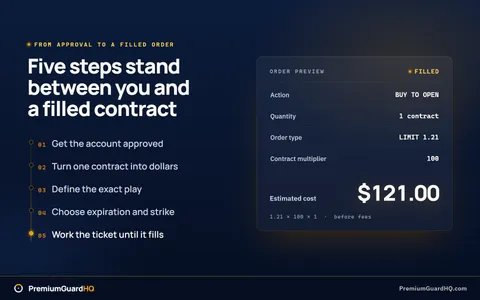
How to trade options: a step-by-step walkthrough of your first order
How to trade options, step by step: get the account approved, size one contract in dollars, read the chain, and place an order that actually fills.

What is options trading? Calls, puts, and why traders use them
Options trading explained in plain terms: what a contract is, how calls and puts differ, what moves premium, and why traders use them.
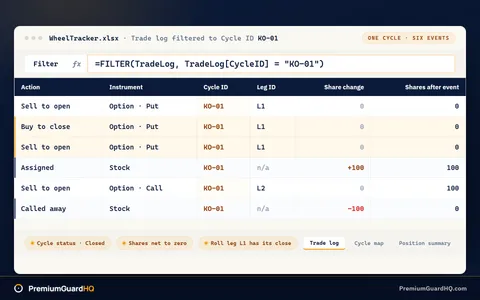
How to build a wheel strategy spreadsheet that shows your real P/L
Build a wheel strategy spreadsheet that ties every put, roll, assignment and covered call into one cycle, with honest cost basis and return on capital.
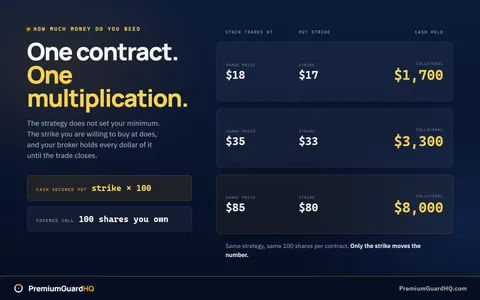
How much money do you need to trade options
What it actually costs to sell one option: the strike times 100 for a cash secured put, 100 shares for a covered call, and the approval level behind both.
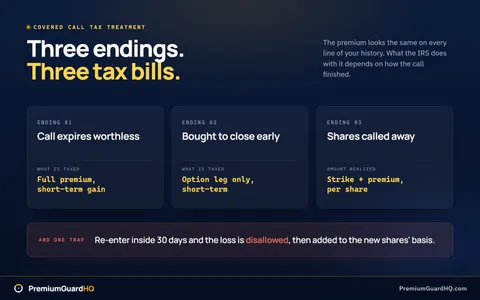
Covered call tax treatment: why identical trades can owe different amounts
How the IRS taxes covered call premium, when a short call pauses your holding period, and how a wash sale can defer the loss you were counting on.
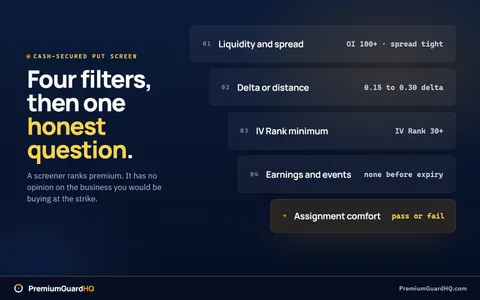
Cash secured put screener: how to screen stocks without chasing junk premium
A four-filter cash secured put screen that turns a messy watchlist into a short list of liquid, ownable contracts, plus the test no screener can run.

How to sell a covered call on Schwab
How to sell a covered call on Schwab: line up your five inputs, place a sell to open order on Schwab.com or thinkorswim, then confirm the shares cover it.

How to sell a covered call on Fidelity
How to sell a covered call on Fidelity: check Level 1 approval and your share count, read the option chain, then place and confirm a sell to open order.
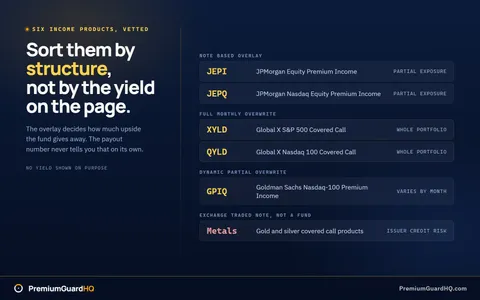
The 6 best covered call ETFs for income, and how to vet them
Six covered call ETFs compared on overlay structure instead of headline yield, plus the five checks to run on any income fund before you buy it.
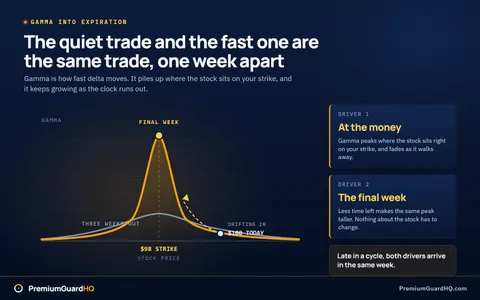
What is gamma in options? The risk that turns a quiet wheel trade into a fast one
Gamma measures how fast delta moves. Why it spikes at the money in the final week, what short gamma does to a wheel position, and how to read it.
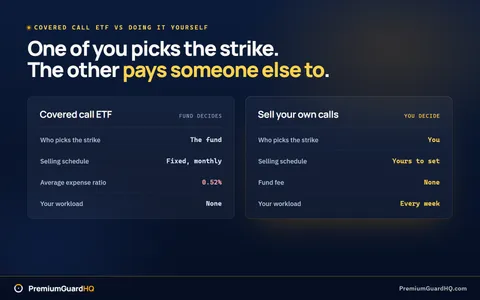
Covered call ETF vs writing covered calls yourself: which one fits how you trade
A covered call ETF hands the options work to a fund manager. Selling the calls yourself keeps control. Here is how the two compare on yield, tax and effort.

What is a cash-secured put? The definition, in plain dollars
A cash-secured put explained in plain dollars: the cash your broker locks up, your breakeven if assigned, and the two ways the trade can end.
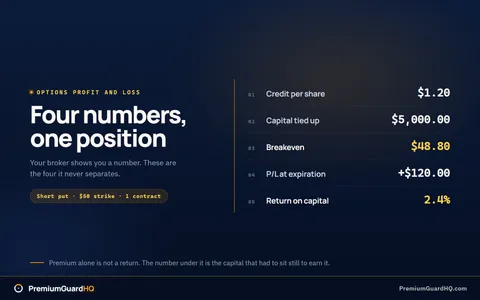
How to calculate options profit and loss the right way
How to calculate options profit: true cost basis, breakeven, dollars at expiration, and annualized return on capital for calls, puts and the wheel.

How to read an options chain: a row-by-row SPY walkthrough
Learn how to read an options chain row by row: bid, ask, spread, volume, open interest and delta, using SPY as the worked example.
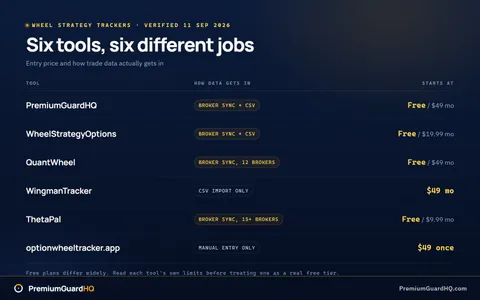
6 best wheel strategy tracker tools for 2026
Compare the 6 best wheel strategy tracker tools for 2026. Learn about broker sync, cost basis, and screening. Find the right software for your trading style.

How to sell a covered call on Robinhood
A step by step guide to selling a covered call on Robinhood: Level 2 approval, the 100 share collateral rule, real contract fees, and the order ticket.
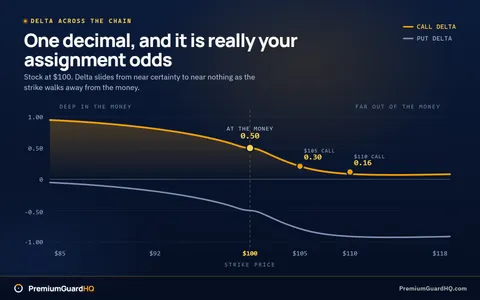
What is delta? The number that tells you your assignment odds
Delta gives premium sellers a rough read on assignment odds. How to read it on a chain, why it moves, and what it costs you to sell far out of the money.
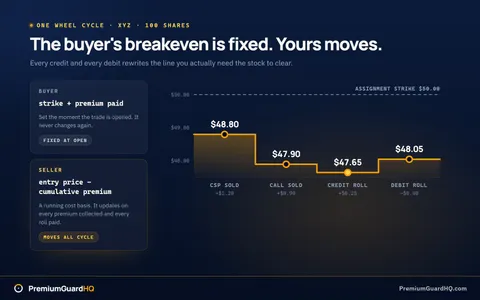
What does breakeven mean in options? Buyer math vs the seller's moving line
What does breakeven mean in options? Buyers get one formula. Sellers running the wheel track a cost basis line that moves with every premium and every roll.
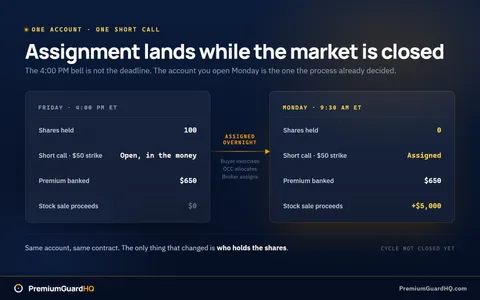
What is options assignment? What happens to your account overnight
Assignment is the buyer using their contract and you completing the deal. What triggers it, when it happens early, and what your account shows the next morning.
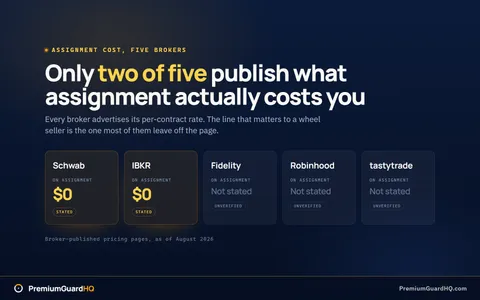
Best brokers for options trading: Schwab, Fidelity, IBKR, Robinhood and tastytrade compared
We compared Schwab, Fidelity, IBKR, Robinhood and tastytrade on approval levels, assignment handling and fees for anyone selling options monthly.
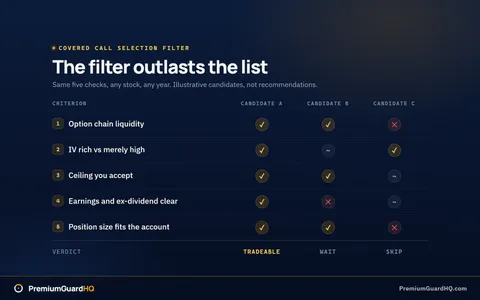
Best stocks for covered calls: a selection framework
Ticker lists go stale every quarter. Five criteria for picking stocks to sell covered calls against, from option liquidity to position sizing.
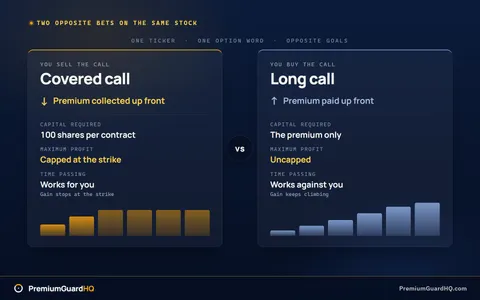
Covered call vs long call: which options trade actually fits your goal
Two opposite bets on the same stock. Compare payoffs, capital, time decay and management to decide whether you are chasing income or chasing upside.
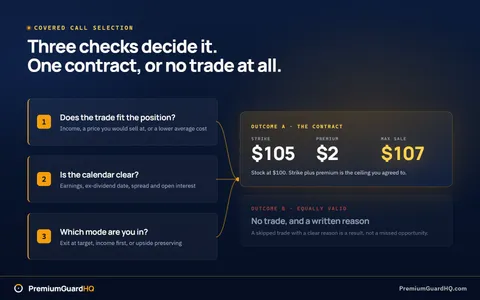
How to pick the right covered call for a stock you own
A three-step way to decide whether a covered call fits the position, which strike and expiry to pick, and what your plan is before the market moves.
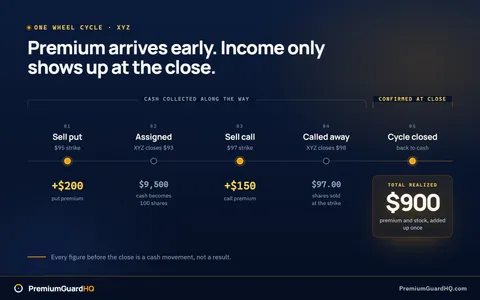
Selling options for income: the honest, unhyped explainer
Selling options for income is not passive. What cash-secured puts and covered calls obligate you to, and why premium is income only once a cycle closes.
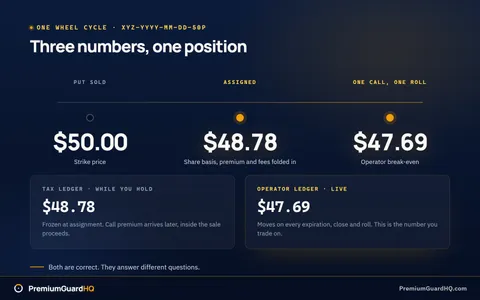
How to calculate wheel cost basis and break-even the right way
An assigned put resets your cost basis. Build the ledger that survives it: basis at assignment, break-even through rolls, and a clean 1099-B reconciliation.
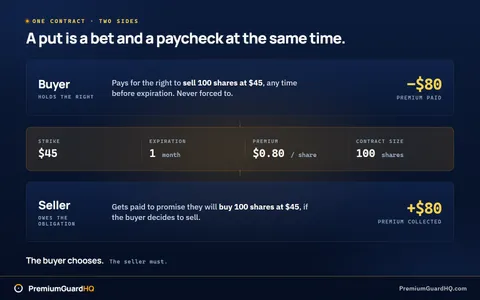
What is a put option? The bet and the paycheck, explained
What a put option is on both sides: the buyer's right to sell, the seller's obligation to buy, payoff and breakeven math, and what assignment means.
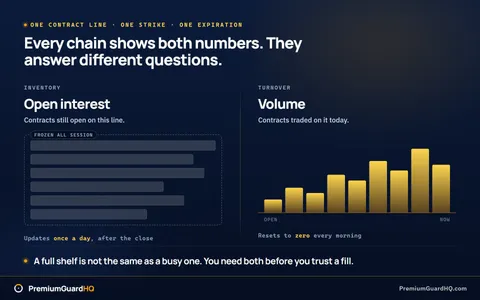
Open interest vs volume: the liquidity check before you sell a put
What open interest measures, when it updates, and how to read it next to volume as a liquidity check before you sell a put or a covered call.

7 options strategies for income: a practical map
Seven options strategies sorted by goal instead of by name: which ones pay income, which ones protect a position, and which ones an income trader can skip.
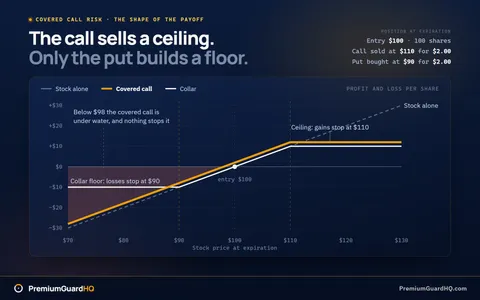
Covered call risk explained: why the payoff isn't just income
A covered call caps your upside and barely cushions a drop. See the full payoff, plus what a protective put or collar actually costs you.

What high IV options really mean before you sell a single put
What high implied volatility actually signals, how IV rank and IV percentile differ, and how to spot the catalyst before you sell the premium.
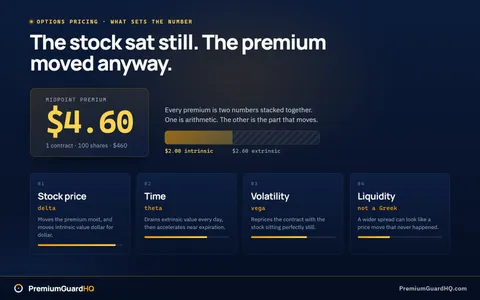
What is options pricing? The forces behind every premium
Options pricing explained: what a premium is made of, the five inputs that move it, and why a calculator's number can disagree with the market's.
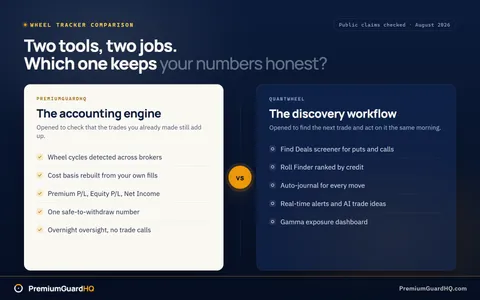
PremiumGuardHQ vs QuantWheel: which wheel tracker actually earns your trust?
PremiumGuardHQ vs QuantWheel on wheel-cycle accounting, cost basis, safe withdrawals, trade discovery, and pricing. Which tracker fits how you trade.
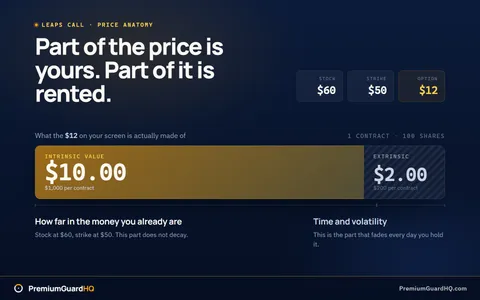
What is a LEAPS call and how do you actually price one?
What a LEAPS call is, what actually moves its price day to day, and a seven-step checklist for picking a strike and modeling it before you buy.
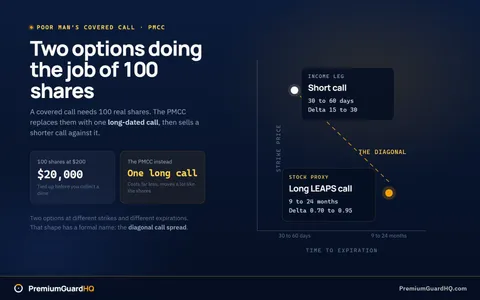
Poor man's covered call explained: structure, math, and risks
How a poor man's covered call works: the LEAPS long call, the short call sold against it, and the three numbers that decide if the trade makes money.
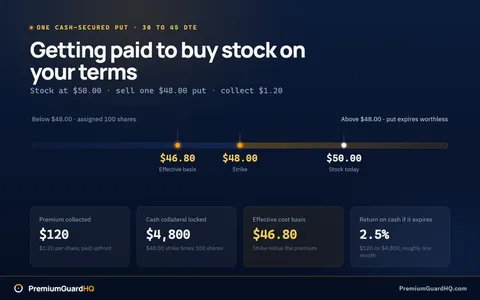
How to sell puts for income: the cash-secured put strategy explained
Learn how to sell puts for income with our cash-secured put guide. Master stock selection, risk management, and the mechanics of collecting premiums monthly.
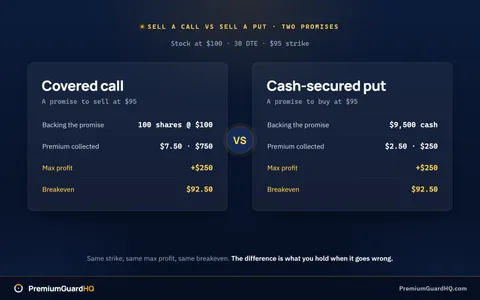
Sell call vs sell put: what you're really signing up for
Covered calls and cash-secured puts both pay premium upfront for a promise. The payoffs, collateral, assignment risk, and how the wheel picks between them.
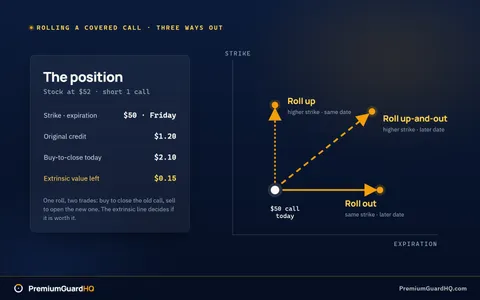
How to roll options: a step-by-step guide for wheel traders
Learn how to roll covered calls with this step-by-step guide. Master rolling up, out, or down to manage risk, capture income, and handle ITM positions.
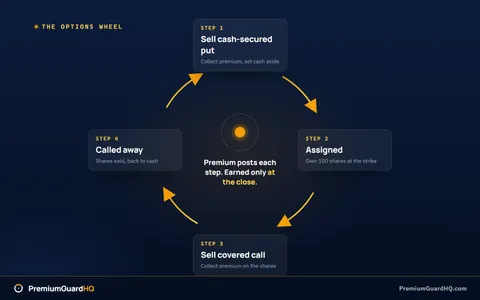
The options wheel strategy explained: covered calls and cash-secured puts for income
The full options wheel strategy: selling cash-secured puts and covered calls for income, managing assignment and drawdowns, and tracking real cost basis.
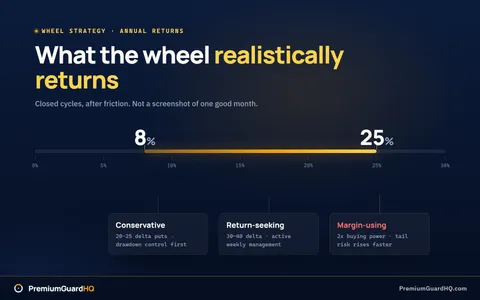
Wheel strategy returns: realistic expectations for operators
What realistic wheel strategy returns look like: premium yield vs total return, why 20% claims mislead, margin math, and how closed cycles keep score.

How to sell covered calls for income
A repeatable monthly workflow for selling covered calls: strike selection by delta, roll decisions with net-credit math, and income verified at cycle close.
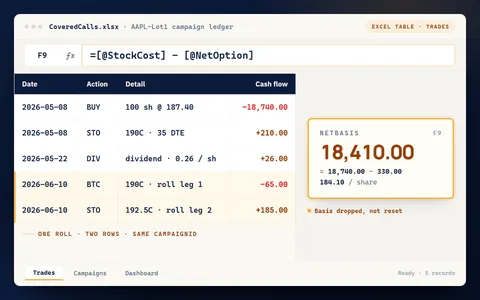
7 covered call Excel formulas that won't break when you roll
Most covered call spreadsheets break the moment you roll. Seven Excel formulas that keep your cost basis, break-even, and monthly income honest through rolls, assignment, and partial lots.