
Sell a put, watch the cash hit the account, and every instinct says you just earned it. The broker reinforces the feeling: the cash balance goes up, the position shows a credit, and the monthly statement adds it to your activity like a paycheck.
But you are still holding the obligation. If the stock drops through the strike, some or all of that premium is going to be spent absorbing the difference between the strike you must pay and the market price of what you receive. The cash arrived first; whether you keep it is decided later. That is the definition of unearned income.
Two ledgers, one trade
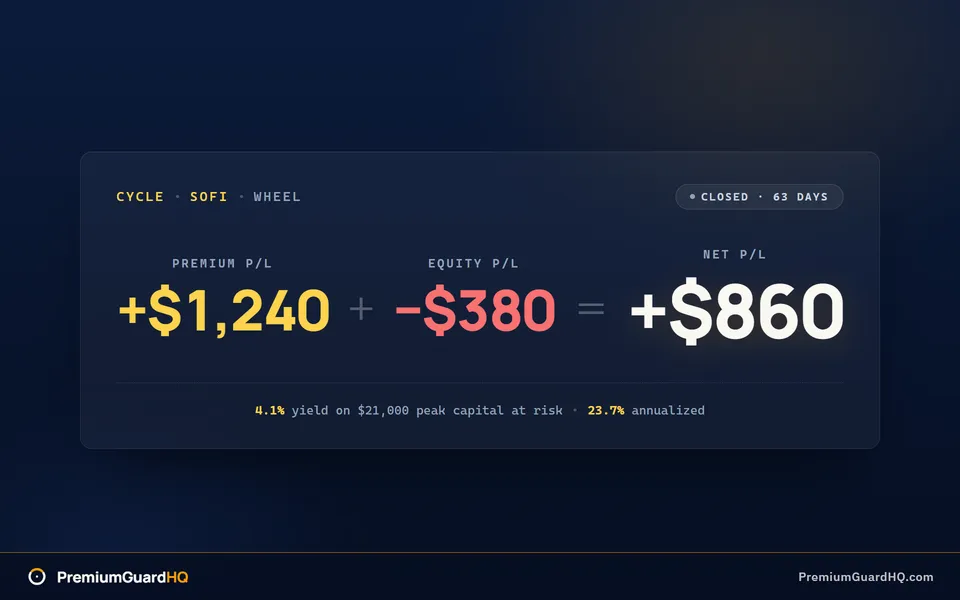
The clean way to think about a wheel cycle is as two running numbers that only mean something together. Premium P/L is every credit collected on the cycle: the original put, the covered calls after assignment, every roll along the way. Equity P/L is what the shares themselves have done against your effective cost basis while you hold them.
A cycle can be printing beautiful premium while the equity leg quietly gives it all back. If you only look at the premium column, the strategy looks like it is working right up until the day you close the position and discover the net. Traders who count premium as earned on day one are booking revenue before delivering the product.
I did not learn that from a book. Back when I was still reconstructing all of this in a spreadsheet, I had a month where I collected about $20,000 in premium and withdrew all of it as income, because that is what I thought income meant. The following month one of those cycles closed at a loss of three or four thousand dollars. The premium that was supposed to absorb that loss had already left the account. Nothing about the trade had gone wrong. My accounting had.
The number that decides whether the wheel is paying you is the third one, Net Income: premium plus equity, realized, after the cycle closes. Not before. Track it that way across enough cycles and you get an honest read on realistic wheel strategy returns, instead of a premium column that flatters you.
Why brokers can’t show you this
Broker statements are built for tax reporting and regulatory accuracy, not for strategy accounting. Wash-sale adjustments shift your basis. Assignments book as fresh stock purchases with no memory of the put that created them. Premium from a call that rolled three times shows up as three unrelated option trades.
None of that is wrong on the broker’s terms. It is just answering a different question than the one you are asking, which is: is this cycle, on this ticker, actually making me money? I ran the wheel for two years before admitting I could not answer that from my statements. Reconstructing it in a spreadsheet worked for five tickers and fell apart at twenty.
That question is the reason PremiumGuardHQ’s methodology is built around cycles rather than trades. Every position is tracked from the opening put through assignment, through every call and roll, to the close, with Premium P/L, Equity P/L, and Net Income carried per cycle. Open cycles show their premium as open, not earned.
The discipline this buys you
Marking premium unearned until the wheel closes is not pessimism. It changes real decisions:
- Withdrawals come from closed cycles, not from open credits that may still be spent defending a position.
- A ticker with fat premium and a bleeding equity leg surfaces in position review immediately, instead of hiding inside a green premium column.
- When you pick strikes knowing the premium has to survive the whole cycle to count, you stop reaching for credits that only look good if nothing ever gets assigned.
The wheel pays people who wait for the cycle to finish before counting the money. Hold the line.